Anti-RAD23B Antibody
417.46 $ – 242.68 $
Western blot
All lanes: RAD23B antibody at 2µg/mL
Lane 1: 293T whole cell lysate
Lane 2: MCF-7 whole cell lysate
Shipping cost plus VAT not included , delivery in 7-14 business days
Catalog No
IGX-49907
Supplier
ImuGeX
Size
100 μg < 50 μg
Product Overview
Product Properties
Target Gene
Product Overview
| Description | Multiubiquitin chain receptor involved in modulation of proteasomal degradation. Binds to polyubiquitin chains. Proposed to be capable to bind simultaneously to the 26S proteasome and to polyubiquitinated substrates and to deliver ubiquitinated proteins to the proteasome. May play a role in endoplasmic reticulum-associated degradation (ERAD) of misfolded glycoproteins by association with PNGase and delivering deglycosylated proteins to the proteasome. Involved in global genome nucleotide excision repair (GG-NER) by acting as component of the XPC complex. Cooperatively with CETN2 appears to stabilize XPC. May protect XPC from proteasomal degradation. The XPC complex is proposed to represent the first factor bound at the sites of DNA damage and together with other core recognition factors, XPA, RPA and the TFIIH complex, is part of the pre-incision (or initial recognition) complex. The XPC complex recognizes a wide spectrum of damaged DNA characterized by distortions of the DNA helix such as single-stranded loops, mismatched bubbles or single-stranded overhangs. The orientation of XPC complex binding appears to be crucial for inducing a productive NER. XPC complex is proposed to recognize and to interact with unpaired bases on the undamaged DNA strand which is followed by recruitment of the TFIIH complex and subsequent scanning for lesions in the opposite strand in a 5′-to-3′ direction by the NER machinery. Cyclobutane pyrimidine dimers (CPDs) which are formed upon UV-induced DNA damage esacpe detection by the XPC complex due to a low degree of structural perurbation. Instead they are detected by the UV-DDB complex which in turn recruits and cooperates with the XPC complex in the respective DNA repair. In vitro, the XPC:RAD23B dimer is sufficient to initiate NER; it preferentially binds to cisplatin and UV-damaged double-stranded DNA and also binds to a variety of chemically and structurally diverse DNA adducts. XPC:RAD23B contacts DNA both 5′ and 3′ of a cisplatin lesion with a preference for the 5′ side. XPC:RAD23B induces a bend in DNA upon binding. XPC:RAD23B stimulates the activity of DNA glycosylases TDG and SMUG1. |
| Host Species | Rabbit |
| Species Reactivity | Human |
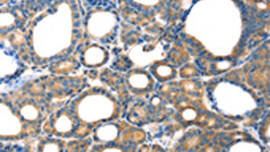
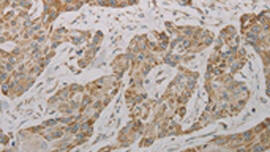
| Applications | ELISA, WB, IHC |
| Recommended Dilutions | WB: 1:500-1:5000, IHC: 1:20-1:200 |
| Conjugate | Unconjugated |
| Immunogen | Recombinant Human UV excision repair protein RAD23 homolog B protein (1-250AA) |
| Specificity | RAD23B antibody detects endogenous level of RAD23B protein |
Product Properties
| Storage Buffer | Phosphate-buffered saline (pH 7.4) containing 0.03% Proclin and 50% Glycerol. |
| Clonality | Polyclonal |
| Isotype | IgG |
| Clone ID | |
| Concentration | 1 mg/mL |
| Storage Buffer | Phosphate-buffered saline (pH 7.4) containing 0.03% Proclin and 50% Glycerol. |
| Formulation | Liquid |
| Purification | This antibody is immunogen affinity purified. |
| Handling | This product contains Proclin as preservative, please take appropriate care when handling this product. |
| Reactivity Life | 12 months when stored properly according to instructions (provided antibody remains sterile). |
Target Gene
NA
Related Products
-
417.46 $ – 242.68 $Buy now This product has multiple variants. The options may be chosen on the product page -
417.46 $ – 242.68 $Buy now This product has multiple variants. The options may be chosen on the product page
